



 SDS
SDS COO/COA
Product Information
General Properties
Other Properties
Description
Safety Information
General Properties
| Storage Conditions | shipped at room temperature, stored at 4 °C |
Other Properties
DESCRIPTION
| Component | Size | Storage |
|---|---|---|
| Buffer EXP | 35 mL | 4 °C |
| Buffer EXN | 15 mL | 4 °C |
| Buffer EXE | 50 mL | 4 °C |
| Buffer EXT | 3 mL | 4 °C |
| Magnetic Beads | 2 mL | 4 °C |
| Syringe Filter A | 10 pcs | Room Temperature (RT) |
| Syringe Filter B | 10 pcs | Room Temperature (RT) |
| User Manual | 1 copy | — |
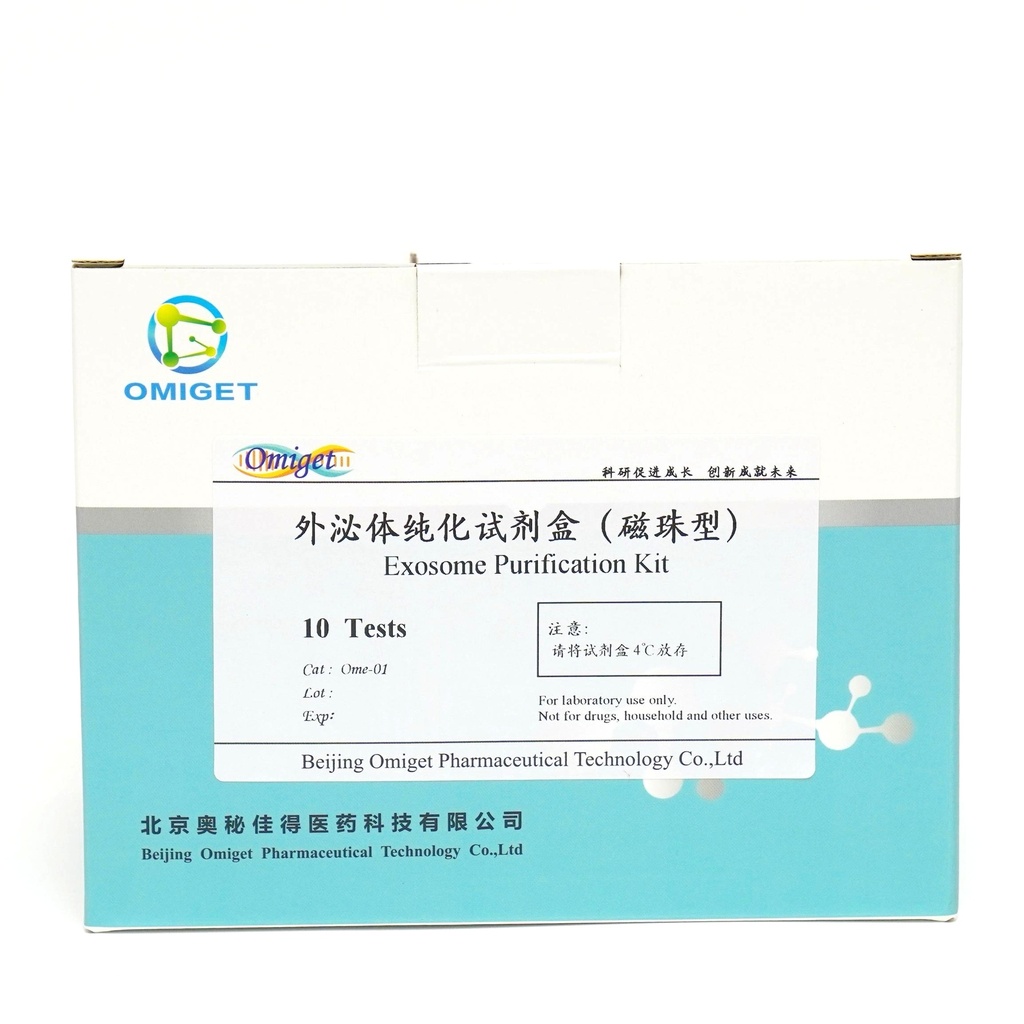
This product is an exosome purification kit based on magnetic bead separation technology. In a specially formulated buffer system, the magnetic beads efficiently capture exosomes, which can then be eluted with PBS or ddH₂O, enabling rapid and efficient exosome isolation and purification.
Exosomes obtained by elution with PBS or ddH₂O do not require additional removal of organic solvents or precipitation reagents, providing good compatibility with downstream applications. The purified exosomes can be directly used for cell culture, cell-based functional studies, and in vivo animal injection experiments.
Key Features & Benefits
- High Purification Efficiency
Provides efficient exosome recovery and purification from a variety of biological samples. - High Purity
Produces highly purified exosomes with low levels of contaminating proteins, making them suitable for downstream functional and mechanistic studies. - Simple and Rapid Workflow
The straightforward purification procedure requires no ultracentrifugation and can be completed in approximately 2 hours. - Gentle Purification Conditions
Magnetic bead-based purification uses mild processing conditions, helping preserve the structural integrity and biological activity of purified exosomes. - Excellent Compatibility with Downstream Applications
Exosomes are eluted with PBS or ddH₂O, without the need for polymer-based precipitation reagents or other additional compounds. The purified exosomes can be directly used for cell culture and in vivo animal injection experiments.
SAFETY INFORMATION
-
Symbol GHS
-
Hazard Code
-
Risk Statements
-
Safety Statements
-
RIDADR
-
WGK Germany
-
RTECS
-
F
-
Hazard Class
-
Packing Group
-
HS Code
-
Toxicity
-
Autoignition Temperature
RELATED PRODUCTS
REFERENCES